For an up-to-date list of my publications, check out my Google Scholar/NASA ADS page,
or continue reading below for an overview of my work.
Supermassive black hole binaries (SMBHBs) present us with exciting opportunities for
multi-messenger science as they are expected to produce gravitational waves (GWs)
detectable with pulsar timing arrays (PTAs) in the nanohertz frequency regime as well
as electromagnetic (EM) radiation arising from its gaseous post-merger galaxy environment.
But uniting these two perspectives is challenging. On the GW side, the localization
capability of PTAs is poor (with sky areas spanning hundreds to thousands of deg^2),
and on the EM side, the proposed signatures of SMBHBs are shrouded in ambiguity.
My thesis research has therefore focused on intertwining PTA observations with large
galaxy catalogs to quantify host galaxy identification prospects following the
first GW detection of an individual SMBHB.
Summary of Delphi. Paper I here:
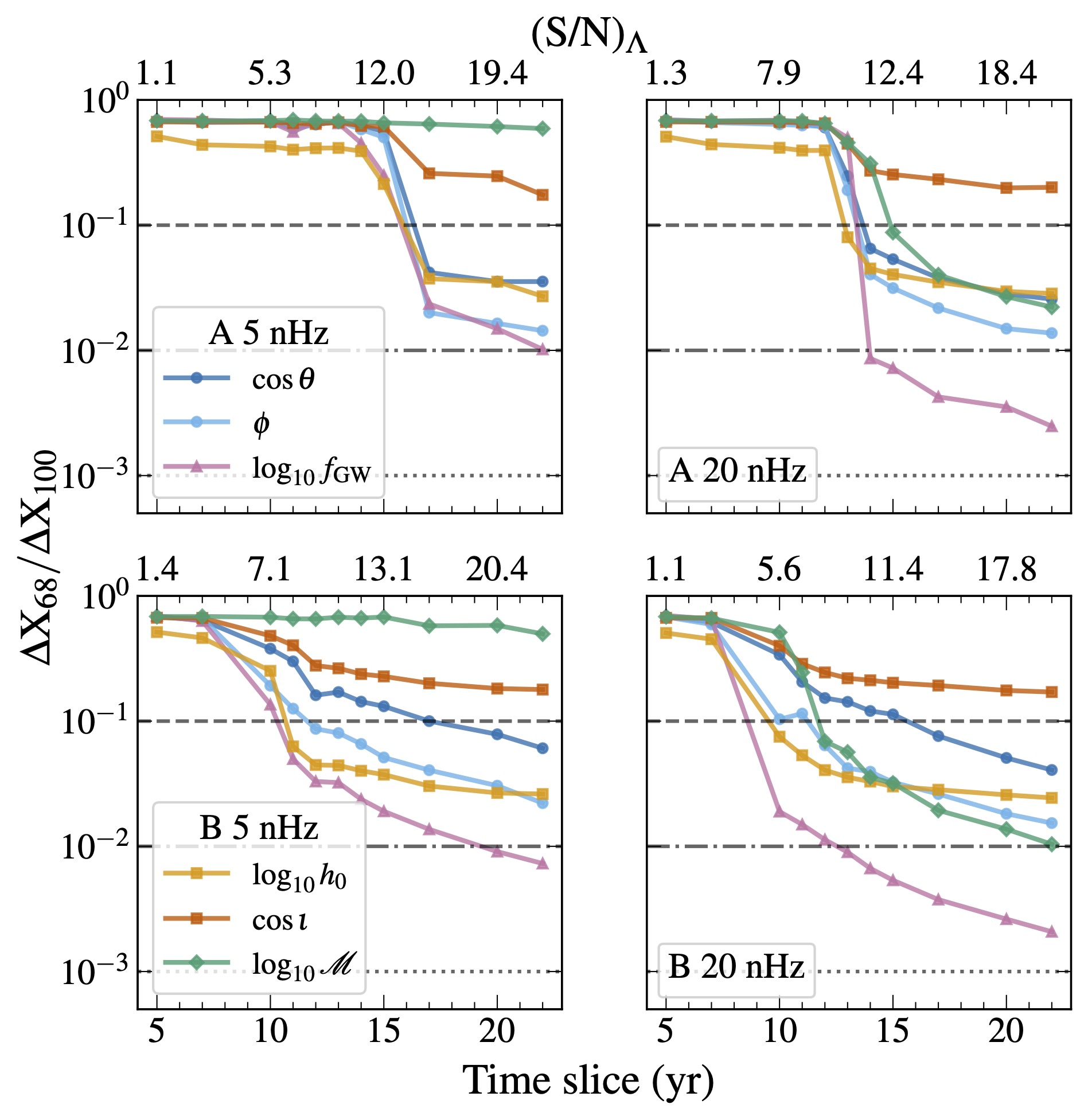
Expectations for the first supermassive black-hole binary resolved by PTAs. I. Model efficacy.
Paper II here:
Expectations for the first supermassive black-hole binary resolved by PTAs. II. Milestones for binary characterization.
My first paper on this topic has been published in The Astrophysical Journal as
of November 2024, which you can read here:
Identifying Host Galaxies of Supermassive Black Hole Binaries Found by Pulsar Timing Arrays.
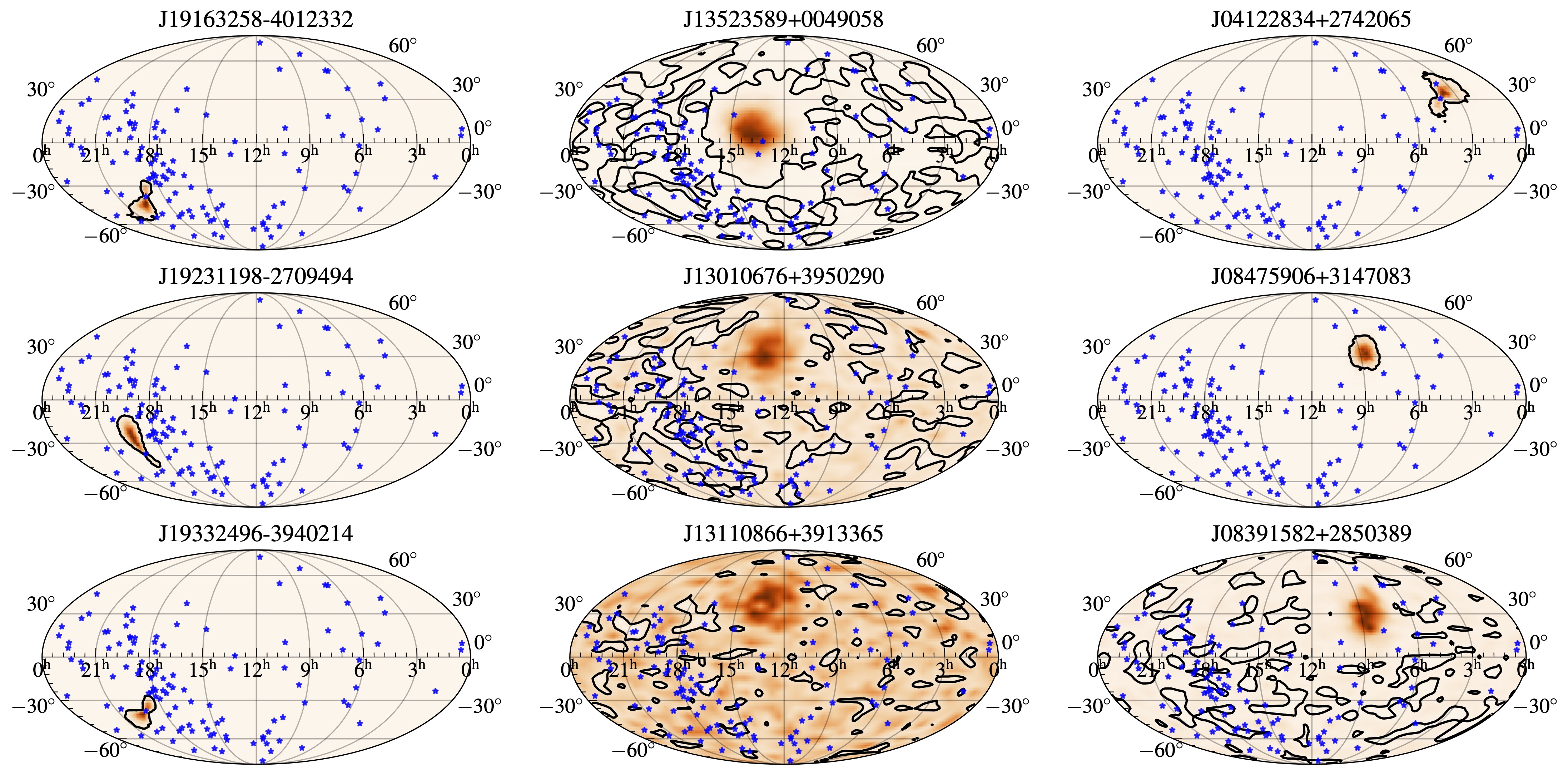
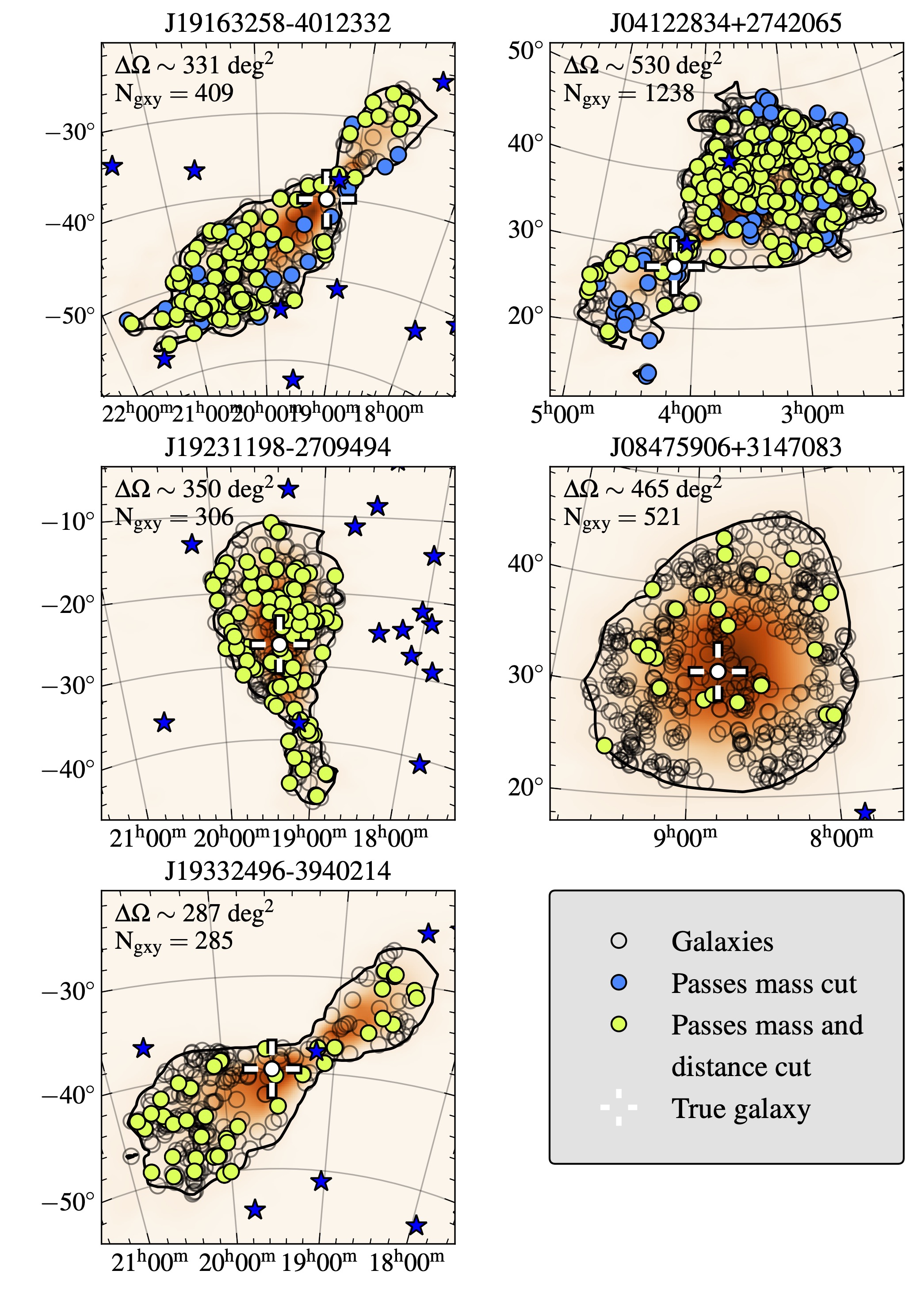
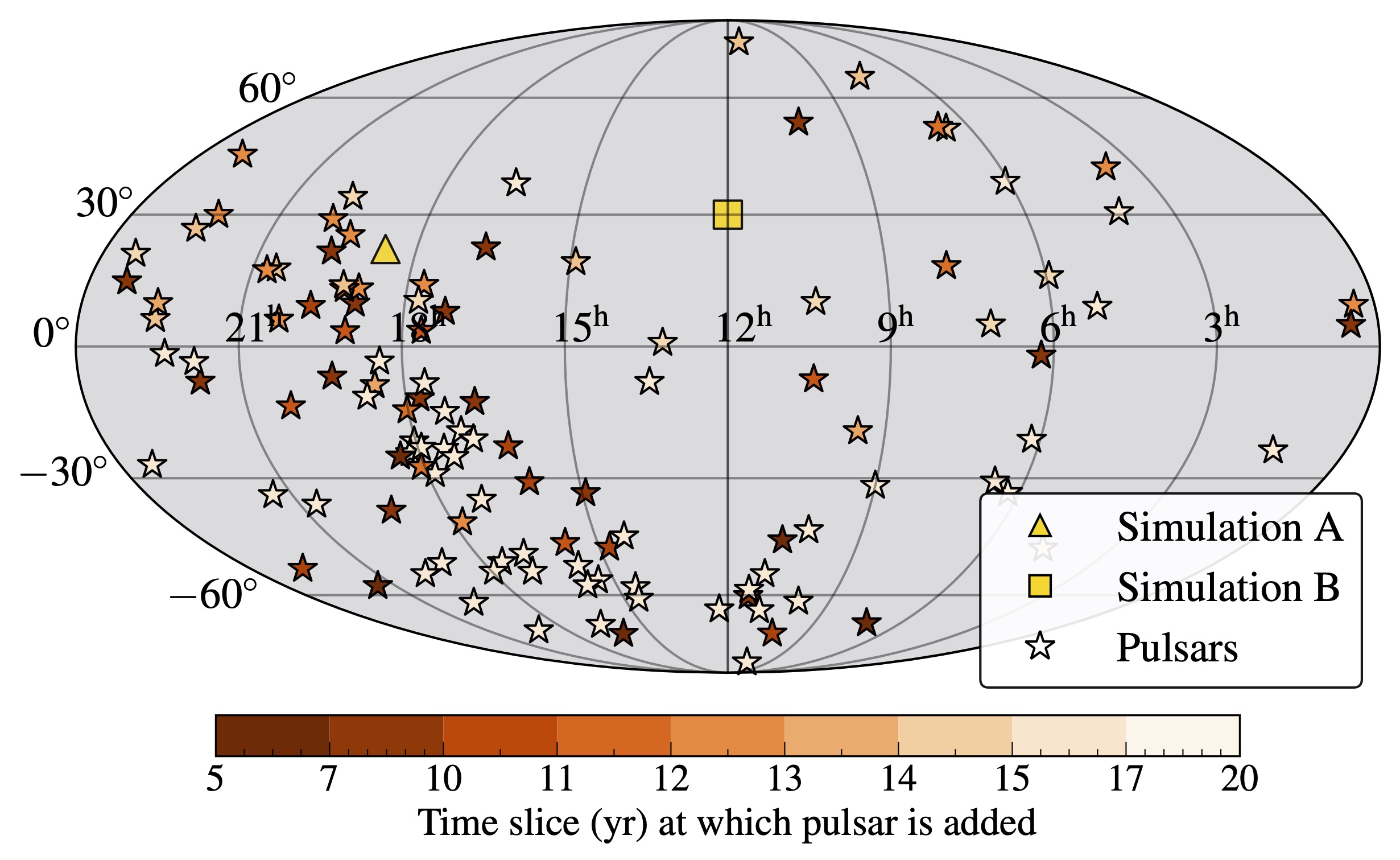
In this work, we outlined a host identification pipeline that injects a single-source
GW signal into a simulated PTA dataset, recovers the signal using a Bayesian MCMC analysis,
quantifies the localization region and number of galaxies contained therein, and finally
imposes cuts on the galaxies using parameter estimates from the GW search. The figures
below show several realistic scenarios, in which each GW signal has a signal-to-noise
ratio (S/N) = 8.